
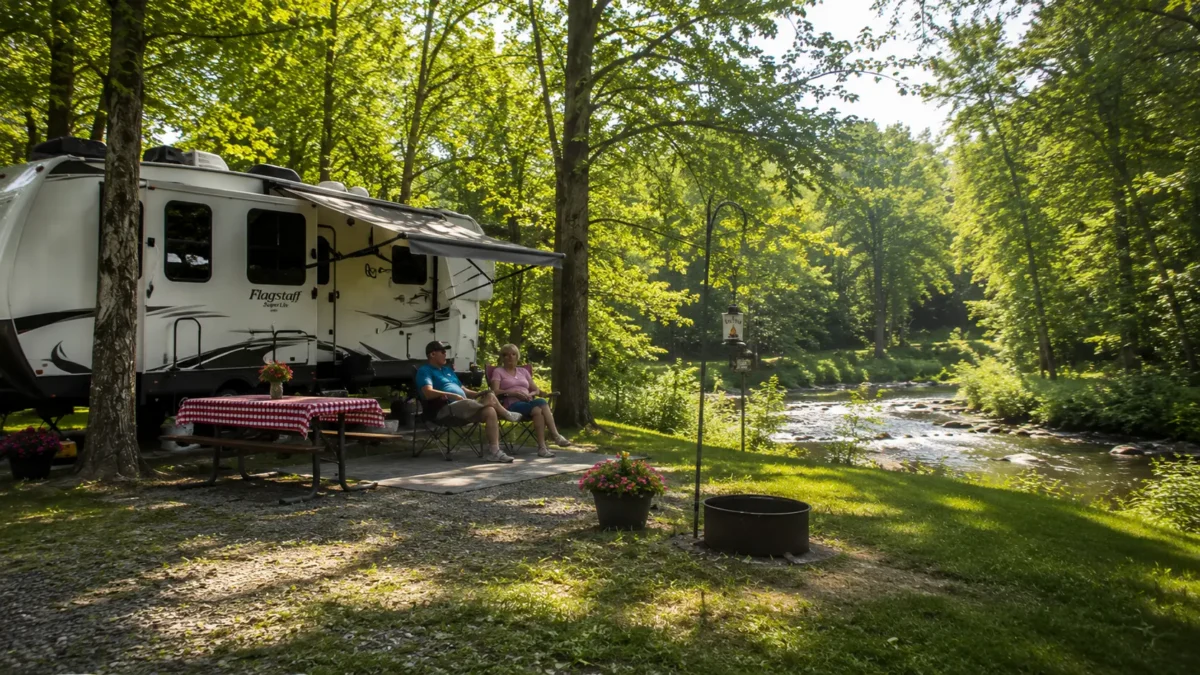
A seasonal site is a real commitment. You pay for the whole season, usually up front, and your rig sits in one spot from spring through fall. That’s a few thousand dollars and five to seven months on a place you’ve probably only seen on one busy holiday weekend.
Before you sign, here’s what a seasonal campsite in the Hudson Valley actually locks you into, what it costs beyond the sticker price, and the one thing that tells you whether it’s right for you, from us at Copake Camping Resort, where we’ve watched plenty of first-timers become long-term seasonals.
What does seasonal really mean here?
A seasonal campsite is a spot you rent for the full camping season and leave your RV parked the entire time. In the Hudson Valley, that season typically runs from late April to the end of October, and you come and go as you please without booking a thing. Your camper stays set up. You just show up.
That’s the appeal, and it’s genuine. No hunting for availability on the Fourth of July. No towing, no leveling, no breaking down every Sunday night. For people who camp in the same area most weekends anyway, it turns a weekend trip into unlocking a door.
But leave it parked cuts both ways, and the money is where most people get surprised. So start there.
The real cost: What’s in the price, what isn’t
Most seasonal rates are billed as one lump sum for the season, and many campgrounds want it paid in full or close to it before you move in. The per-night math looks great next to nightly rates. The catch is everything the season fee doesn’t cover.
Electric is the big one. Plenty of seasonal sites bill electricity separately on a meter, in addition to the seasonal fee. RVers who’ve done it report anywhere from about $30 a month for a rig that mostly sits, to closer to $100 in a hot stretch with the air conditioning running hard. Ask flat out whether electricity is included or metered before you compare two campgrounds on price, because a cheaper site with metered power can end up costing more.
A few other line items worth asking about up front:
- Guest fees for anyone beyond your immediate family, and day-visitor rules.
- Golf cart registration, if you’ll bring your own.
- Whether taxes and any resort fees are baked in or added on.
- First-year discounts or referral credits that some campgrounds offer but never advertise. It’s worth a direct question.
The rig itself: Rules that decide if you even qualify
Before the money conversation goes anywhere, one thing can end it fast: your RV might not be eligible. Some campgrounds cap how old an incoming seasonal rig can be, and a common line is roughly twelve years or newer. If your camper is older, ask before you fall in love with a site.
Two more rig questions matter for a stationary summer.
First, the electric service. If you’re running air conditioning through July and August, 50-amp service handles the load far better than 30-amp, which forces you to juggle the AC against the microwave and everything else. This is exactly the situation where amperage stops being a spec and starts being your comfort.
Second, winter. Find out where the rig goes when the season ends. Some campgrounds let you store it on-site over the off-season, sometimes free when you renew your seasonal spot for the next year. That single perk can save you a storage bill and a tow.
Life on a seasonal site: The honest trade-offs
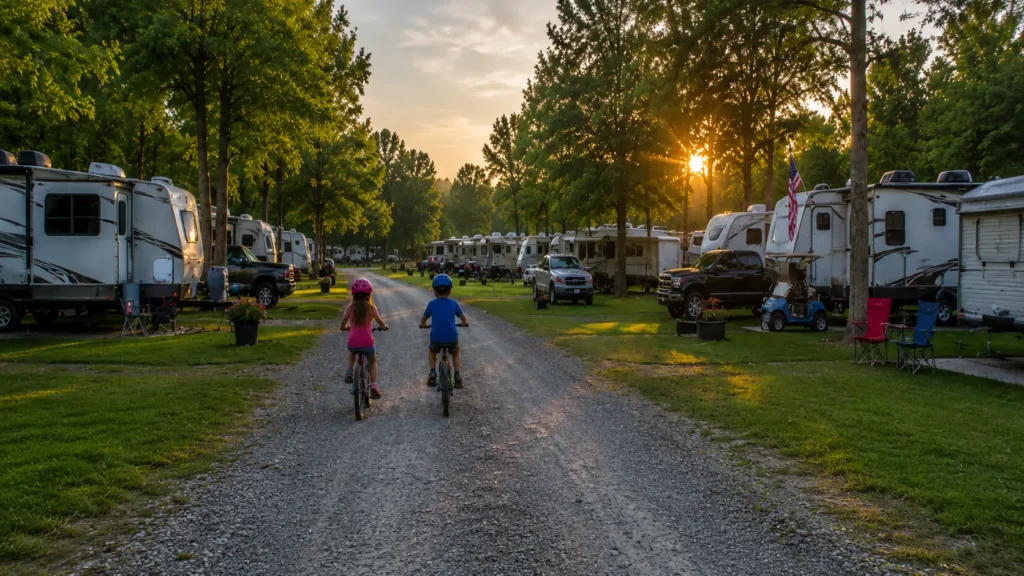
Here’s the part the listings skip. A seasonal site is wonderful, but it has real downsides; you should weigh both.
The upsides are concrete. Your gear lives there, so a spontaneous overnight takes no packing. You get the same site every weekend and a guaranteed spot on every long weekend of the summer. And you become a regular, which is how the community forms. Ask any long-time seasonal camper what keeps them coming back, and most will say the neighbors before they say the site.
The downsides are just as real. You’ll likely feel some pull to use the site to justify the cost, which can quietly kill the urge to travel somewhere new. Your RV sits in the sun all summer, which weathers it faster than garage storage would. And you don’t get to pick your neighbors. A good seasonal community is a huge draw; a cluttered or unfriendly section is a long season. This is why seeing the place in person, mid-week and on a normal weekend, matters more than any brochure.
Is it even camping? And is the location worth a whole season?
Seasoned RVers half-joke that a parked camper with a deck and a shed isn’t really camping anymore. Fair enough. The honest answer is that seasonal camping is less about roughing it and more about having a second, simpler place close to home. If that’s what you want, the label doesn’t matter.
What matters is the location, because you’re committing to one. The Hudson Valley works for this precisely because of the drive. From New York City, Westchester, Connecticut, northern New Jersey, or western Massachusetts, a Columbia County site sits in the two-to-three-hour sweet spot: far enough to feel away, close enough that a Friday-night run is worth it.
Before you commit, look at what’s actually around the campground, from state parks and swimming spots to the small-town food and farm markets you’d fill a season of weekends with. A seasonal site is only as good as the region you’re anchoring yourself to.
The smart move before you commit: Test it first
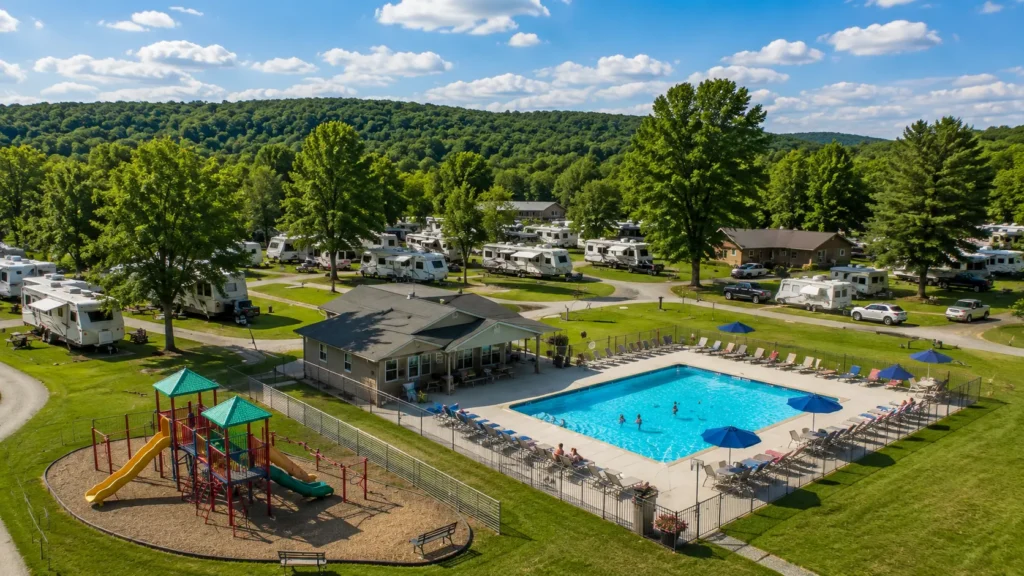
If you take one thing from this, take this: try the campground before you go seasonal. Experienced campers say it over and over, and almost nobody does it. Book a week or a vacation stay, or a couple of separate weekends, at the place you’re considering. Meet the seasonal crowd. Walk the sites you’d actually be offered. See how the bathhouse looks on a full holiday weekend, not an empty Tuesday.
That’s the whole case for how we’d start a season at Copake Camping Resort. We’re in Copake, right in Columbia County, with full-hookup sites and 50-amp service on every one, so the summer-long AC question is already answered. A short stay lets you see the seasonal community, the themed weekends, and the RV sites in person before you decide anything. If a full season isn’t your speed, a returning family can just as easily book a pet-friendly cabin year after year instead.
Seasonal camping rewards people who know exactly what they’re signing up for. Come see it first, ask the questions above, and commit when you’re sure.
Questions to ask before you sign
- Is the season fee paid up front, and what dates does it cover?
- Is electricity included or metered separately?
- Is there an age limit on incoming RVs?
- Is 50-amp full hookup available on the site I’d get?
- Can I store the rig here over winter, and is it free with renewal?
- Do you hold my site for next year, and are there first-year or referral discounts?
- Do you accept packages for seasonal guests?
Frequently asked questions
How much does a seasonal campsite cost?
Seasonal rates are billed as one fee for the full season and vary by campground and site location, with premium and waterfront sites costing more. Many campgrounds require most or all of it up front. Electric is often billed separately on a meter, so ask what the fee includes before comparing prices.
Do you pay for electric separately at a seasonal site?
Often, yes. Many seasonal sites meter electric and bill it on top of the season fee. Actual cost depends on your usage, especially air conditioning, and RVers commonly report somewhere between $30 and $100 a month across the season. Always confirm whether power is included or metered.
Can I leave my RV at the campground over winter?
At some campgrounds, yes, and a few include off-season storage free when you renew your seasonal site for the following year. It isn’t universal, so ask directly, and confirm whether you’re responsible for winterizing the rig.
Is a seasonal campsite worth it?
It’s worth it if you already camp in the same area most weekends and value a set-up-and-ready home base over traveling to new places. It’s a poor fit if you like moving around, since a seasonal site trades your RV’s portability for convenience. Testing the campground with a short stay first is the clearest way to know.
