
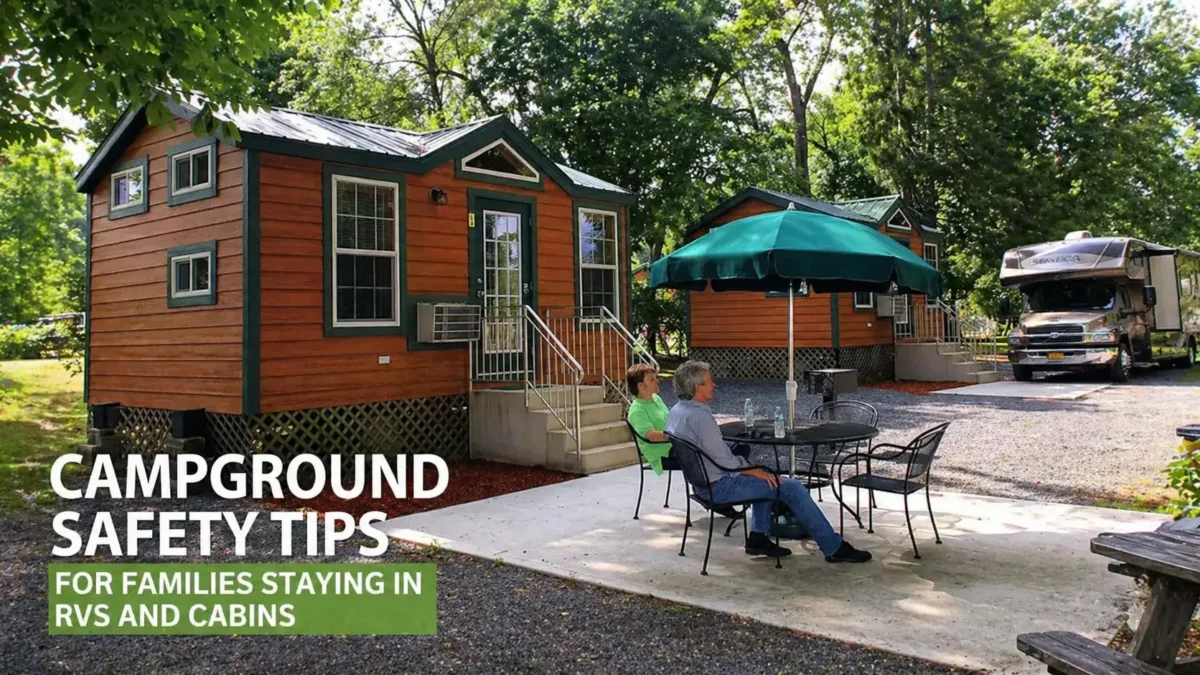
A family campground stay can feel easy one minute and messy the next. Kids want to head to the pool, bags are still being unloaded, someone is handling food, and the dog is excited to explore. Most safety problems do not start with something major. They usually start when the site is not fully set up, the rules are not clear yet, and everyone starts moving too quickly.
That is why the best campground safety tips are the practical ones. For families staying in RVs and cabins, the real pressure points are usually the same: setup, pool time, campground roads, bikes, pets, grill areas, fire rings, and the last few minutes before bed. At Copake Camping Resort, those details matter more than generic camping advice because families are moving between campsites, cabins, shared spaces, and activity areas throughout the day.
What matters most on a family campground stay
Family campground safety is less about big warnings and more about simple habits that work all weekend. A clean RV setup, a clear cabin entry, one adult actively watching the pool, and a few rules about roads, pets, and fire can prevent most of the problems families actually run into.
That is what makes this topic different from general camping safety content. If you are staying in an RV or cabin, you are not trying to prepare for a backcountry trip. You are trying to keep the stay smooth, safe, and easy to manage while kids, gear, meals, and activities all happen at once.
Start with the first 10 minutes
The first few minutes after you arrive can set the tone for the whole stay. Before anyone heads to the pool, playground, or activity area, take a quick walk around your RV or cabin as a family. Pick one easy meeting spot in case anyone gets separated, and make sure kids know exactly where your site ends and where they need an adult to go farther.
As you walk, look for the small things that usually cause problems later, like hoses, cords, steps, wet ground, grill space, fire rings, or bags near the entry. It also helps to keep the basics like sunscreen, bug spray, medicine, wipes, and a flashlight in one place instead of spreading them across the site. It is a simple habit, but it clears up a lot of confusion before the day really starts.
RV safety starts with a clean setup
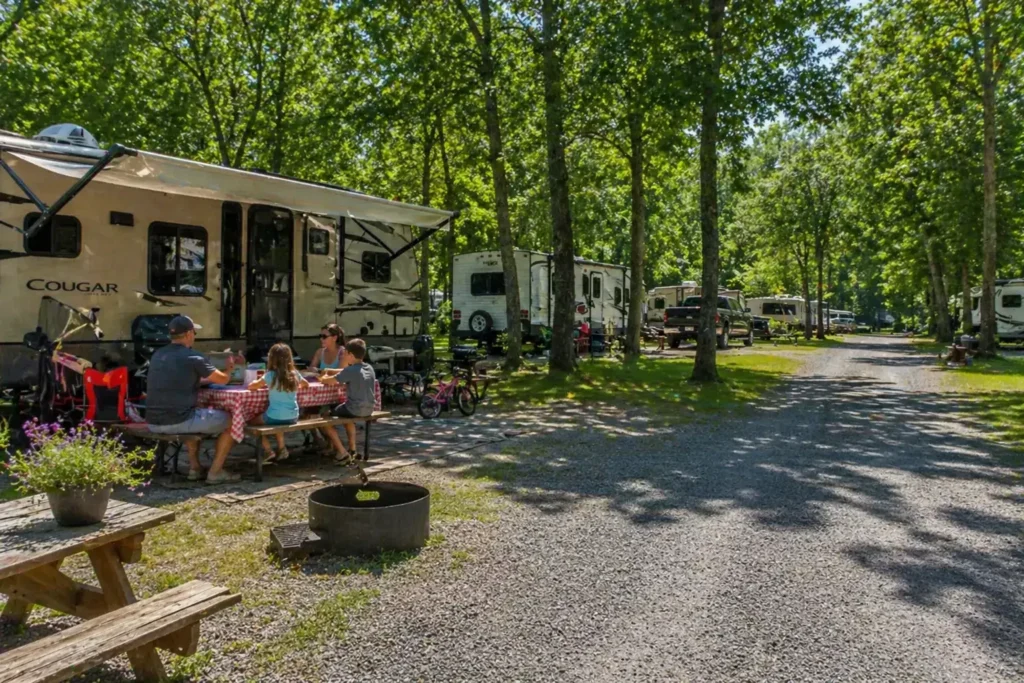
If you are staying in an RV, safety starts with the setup. A rushed power hookup, a loose sewer connection, or a messy walking path can create problems that follow the family for the rest of the day. That is why it helps to slow down and get the basics right before the chairs come out and the fun starts.
Check your power cord before plugging in, keep the water hose out of the main walkway, and make sure the sewer hookup is secure and tidy. Smoke, propane, and carbon monoxide alarms should also be tested before the trip, not after you arrive. The cleaner the setup feels, the easier the whole stay becomes. That is especially true on family trips where your attention is already split between kids, meals, activities, and everything else happening around the site.
Cabin stays need a different kind of attention
Cabins feel simpler because there are no RV hookups to manage, but they come with their own safety issues. Most of them are not dramatic. They are the everyday things families overlook, like wet shoes near the door, pool bags on the floor, or kids moving too fast around steps and outdoor cooking space.
The easiest fix is to keep the cabin entry clear and keep the space easy to move through, especially after dark. If you are using an outdoor grill, treat that area like a real cooking zone and keep kids from cutting through it while someone is carrying hot food or handling charcoal. Cabin safety is usually less about equipment and more about movement, clutter, and keeping the space calm enough that nobody gets hurt doing something routine.
Pool safety needs full attention
This is the part families underestimate most. Pool time feels controlled because it is part of a family resort, but that can make adults relax too early. The biggest mistake is thinking that being nearby is the same as actually watching.
One adult should be fully responsible for the water at a time. That means no half-watching while packing towels, checking a phone, or helping with snacks. Kids need close supervision in and around the pool, and the last few minutes are often when problems happen because adults assume the risky part is already over. At Copake Camping Resort, pool time works best when families treat supervision as part of the activity, not something happening in the background.
Roads, bikes, and golf carts need rules on day one
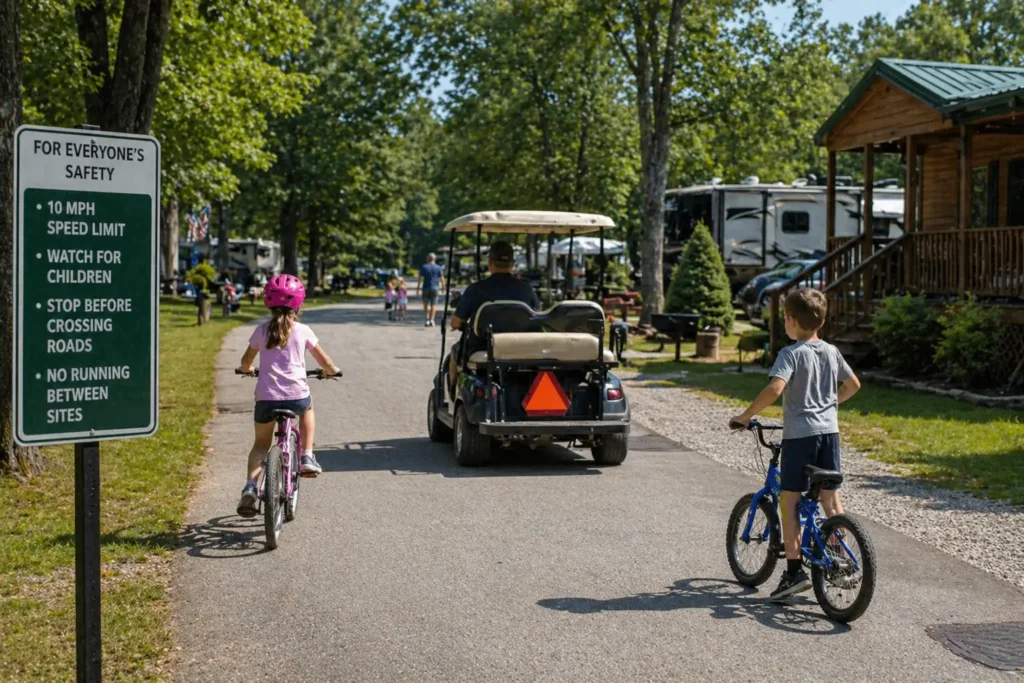
Campground roads look quiet, and that is exactly why kids stop treating them like roads. Once children start moving between the site, the pool, the playground, and activity areas, adults need rules that are simple enough to repeat every day.
Kids should stop before crossing any campground road, and they should never run between parked RVs, cabins, or golf carts where visibility is limited. The same goes for bikes and golf carts. Slow traffic still needs attention, especially once the campground gets busy or the light starts to drop. These are the movement risks that affect family resort stays the most, and they are usually missed in generic camping articles.
Pet safety changes the whole feel of the site
A pet-friendly stay can feel easy or chaotic depending on how the dog is handled. A calm dog makes the site feel more relaxed. An overstimulated dog changes the whole rhythm of the stay.
Keep pets close, keep the leash short, and do not assume your dog will stay calm in every setting just because they are fine at home. Kids, bikes, food, noise, and unfamiliar spaces can all raise a dog’s stress level quickly. It also helps to build in quiet time so the dog is not part of every activity all day. At Copake Camping Resort, pet safety works best when the dog is treated as part of the family plan, not as an afterthought once everyone arrives.
Fire rings and grills need one adult in charge
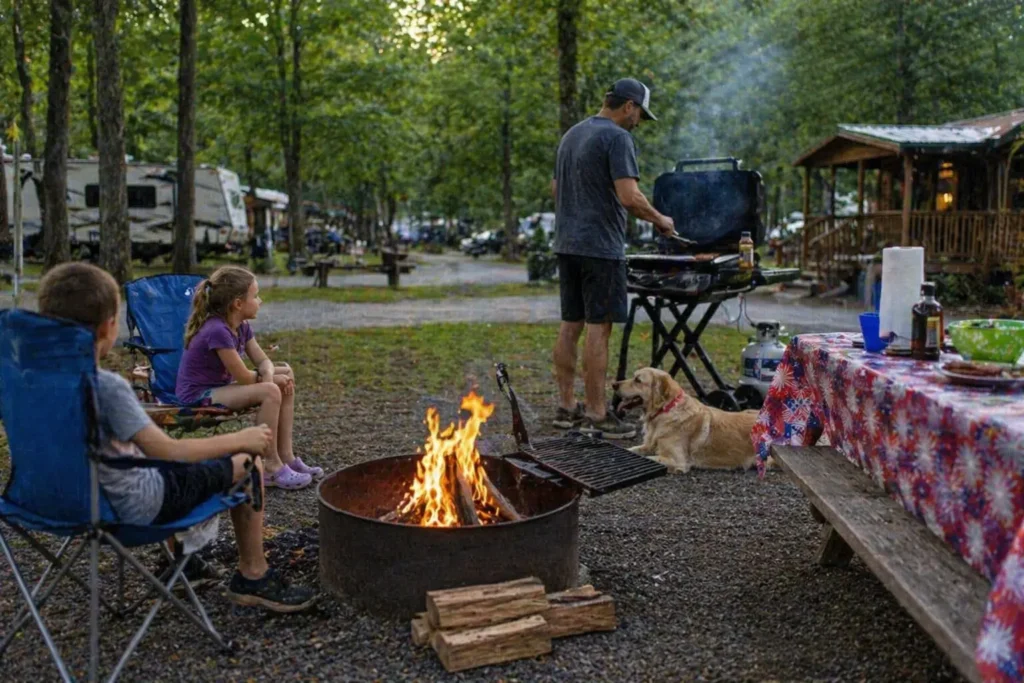
Evening is when families start to relax, and that is often when fire safety gets overlooked. At Copake Camping Resort, campfires are allowed only in metal fire rings, and outside firewood is not allowed. Campfires also cannot be left unattended and need to be fully out before bed or before leaving the site. The same mindset applies to grills. Once heat is involved, one adult should be clearly in charge from start to finish.
That adult should keep kids away from the grill area, stay nearby while cooking is happening, and make sure the fire or charcoal is handled properly when the night winds down. The easiest family rule here is the best one: if a fire or grill is going, one adult owns that job all the way through.
The last five minutes of the day matter
A quick reset before bed makes the site safer and calmer for everyone. Bring in toys, shoes, balls, and loose gear before it gets dark so nobody is stepping over things later. Make sure phones and flashlights are easy to find, and take one last look around the site before everyone settles in for the night.
It also helps to make sure everyone knows the basic exit path, especially in an RV or cabin where movement gets tighter after dark. At Copake Camping Resort, minors need to be back on their site and under direct adult supervision by the evening, which also helps the campground feel quieter and more settled at night. It is not overthinking it. It is just what helps the day end cleanly.
The habits families actually remember
The safest family campground stays are usually the ones with the clearest routine. Most preventable problems happen when the first hour feels rushed, the rules are unclear, and shared spaces like roads, pools, and grill areas are treated too casually. Families do better when expectations are simple from the start and everyone knows how the site works.
At Copake Camping Resort, that kind of routine fits the stay naturally. Families move between RV sites, cabins, pool areas, roads, pets, and activity spaces all day, so safety works best when it feels built into the trip rather than added on top of it. Slow down the first hour, set the rules early, keep shared spaces in mind, and keep the setup clean. When those basics are handled well, the whole stay feels easier.
Common questions families ask before they arrive
Walk the site before anyone spreads out. It is the fastest way to spot steps, cords, grill space, fire areas, wet ground, and kid boundaries.
Usually the setup. Loose hookups, unchecked cords, skipped alarms, and cluttered walking paths create a lot of avoidable stress once the trip gets busy.
Keep the entry clear, slow kids down around steps and grills, and make nighttime movement easy. Most cabin safety issues come from clutter and fast movement, not major hazards.
Very often, yes. Pool areas feel relaxed, which makes it easier for adults to assume someone else is watching. One adult needs to be clearly responsible at a time.
Keep the leash short, do not leave pets unattended, and do not assume your dog will stay calm in every setting. New places can make even friendly dogs more reactive than usual.
Slow the first hour down, set clear rules on day one, and do a quick reset before bed. Those three habits prevent more problems than most long safety checklists.